Location
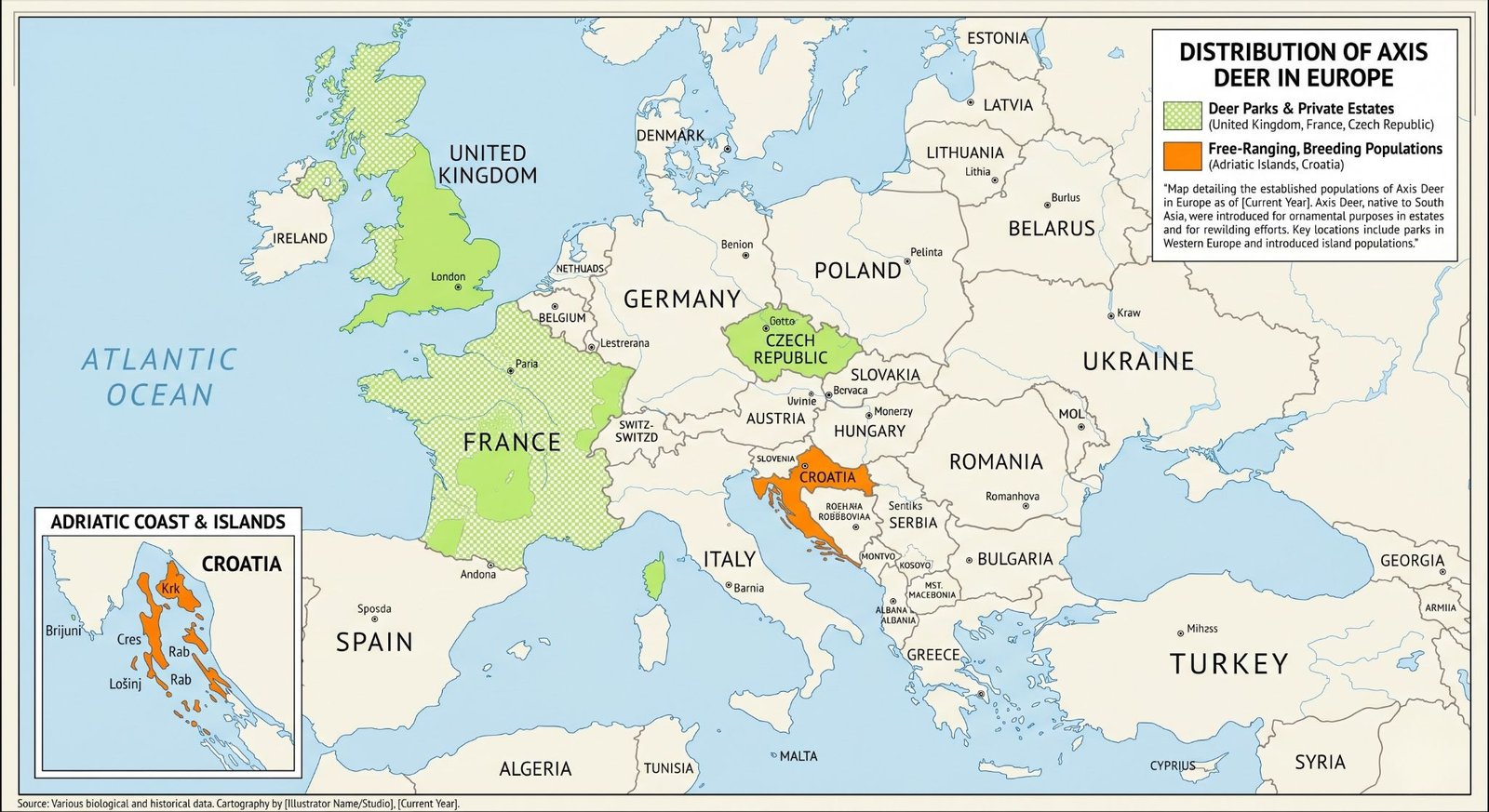
Native to the Indian subcontinent, the Axis Deer has been widely introduced across all continents due to its aesthetic appeal. In Europe, they are primarily found within deer parks and private estates in the United Kingdom, France, and the Czech Republic. Additionally, free-ranging, breeding populations were established on the Adriatic islands (notably Croatia) during the latter half of the 20th century.
Description
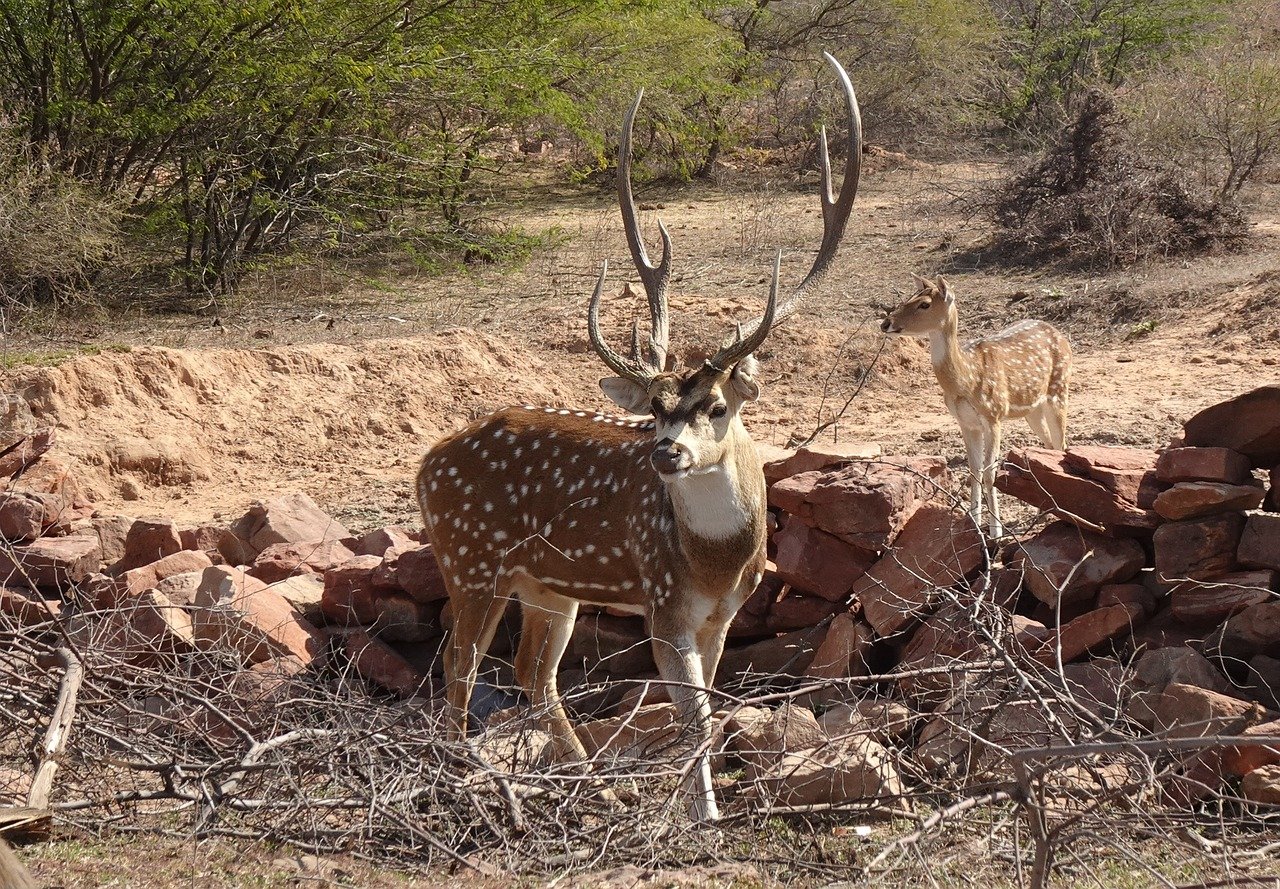
The Axis Deer is a slender, graceful, medium-sized species. Males stand 31–35 inches at the shoulder and weigh between 150–200 pounds, while females are notably smaller.
- Coat: Bright reddish-fawn adorned with permanent white spots. A dark stripe runs along the spine, while the underparts, throat, and lower legs are white.
- Antlers: Large, lyre-shaped antlers typically feature three points per side (the main beam and two tines). Non-typical specimens may occasionally grow small, additional tines near the brow tine junction.
Remarks
- Behavior: Highly gregarious, they live in herds of 5 to 30 individuals with fluid social structures. Unlike many temperate species, they breed year-round, meaning stags with hard antlers can be seen in any season.
- Activity & Diet: Primarily diurnal grazers that browse when grass is limited. They are sedentary animals that lack insulating fat, making them unable to tolerate cold climates.
- Habitat: They favor woodlands and dense riverine thickets near water, requiring thick scrub for both shade and cover.
- Sensory Traits: They possess excellent eyesight and a sharp sense of smell and hearing. During the rut, stags are known for their harsh, loud bellows and frequent, aggressive fighting.