Location
- Current Distribution: Found primarily in Russia, Romania, and the former Yugoslavia. They also occur in Norway, Sweden, Finland, the Czech Republic, Slovakia, Poland, Hungary, Albania, Bulgaria, and Greece.
- Remnant & Endangered Populations: Small remnant populations persist in Spain, France, and Italy. Notably, the Italian population was listed as endangered by the USF&WS in 1976.
- Global Range: Outside of Europe, the species is found throughout northwestern Asia.
- Habitat: They inhabit coniferous forests with dense understories of food plants, often favoring steep terrain and areas with difficult human access.
Description
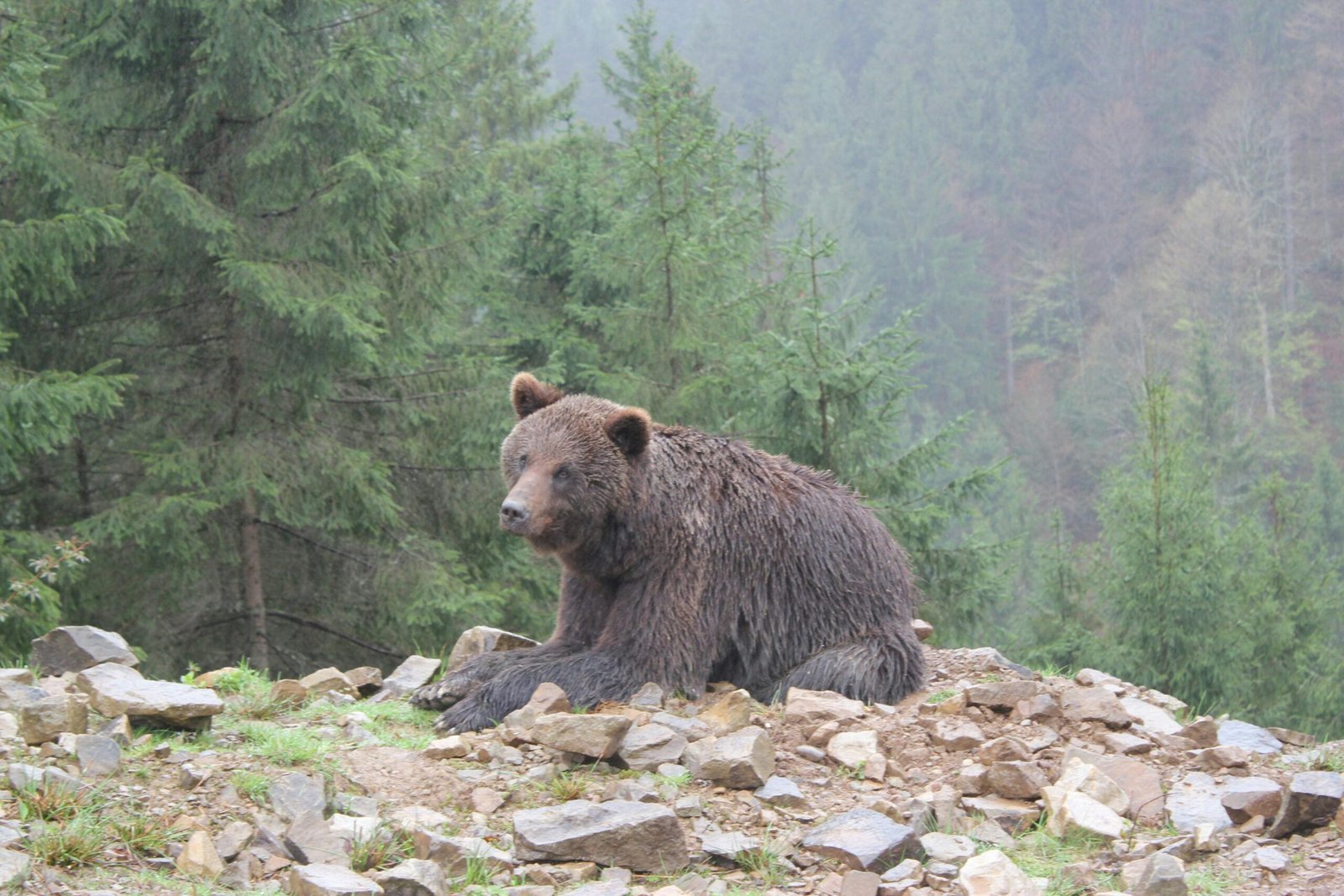
- Size: Males typically weigh between 220–660 pounds (100–300 kg) with a shoulder height of 35–43 inches. Females are smaller, roughly two-thirds the size of males.
- Build: A powerfully built bear characterized by a distinct shoulder hump, a large head, a muscular neck, and a concave facial profile.
- Coat: Coloration varies individually from light grayish-yellow to very dark brown. Juveniles may feature a pale collar, and the length of the coat changes based on the season and region.
- Claws: Because of their significant body weight and the specific shape of their claws, adults are unable to climb trees.
Remarks
- Behavior: Generally solitary and territorial. They are active mainly at twilight and night, and are surprisingly fast runners and excellent swimmers.
- Hibernation: They den up in caves or rock crevices for 3 to 6 months depending on the latitude.
- Diet: Largely herbivorous, though they also consume insects, honey, fish, and rodents. Occasionally, they prey on larger animals like moose, reindeer, or livestock.
- Reproduction: Breeding occurs from late May to July; cubs (usually twins) are born in the den during winter and remain with the mother for two years or more.
- Hunting: The largest specimens are typically found in Eastern Europe. Hunting methods include baiting in the spring, chance encounters in the fall, or drives; in Russia, bears are sometimes hunted in their dens during hibernation.
- Status: While no longer in danger of extinction across Europe, their range is shrinking due to habitat loss. They are seasonally or totally protected in most countries.