Location
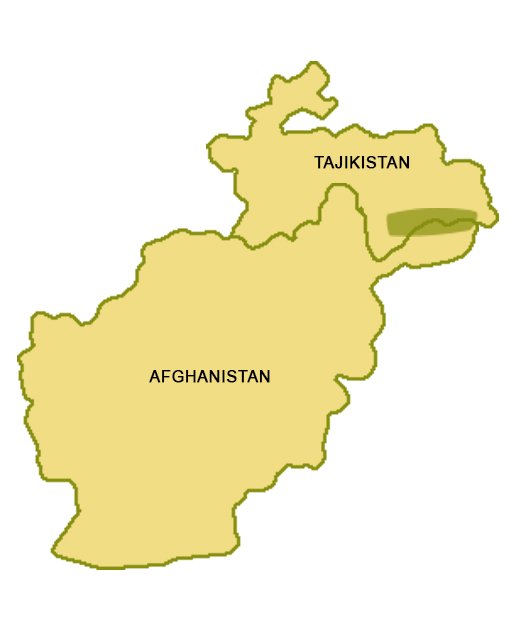
An extensive range along the Wakhan Corridor through the southern Pamir Mountains of Tajikistan along the northern shore of Lake Victoria on the Afghanistan border and eastward into China’s western Tibetan Plateau.
Description
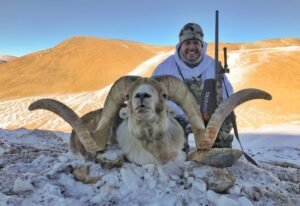
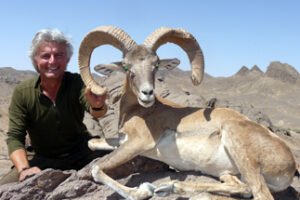
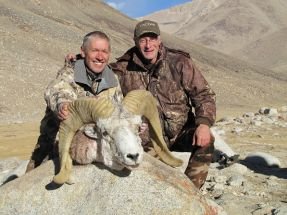
A large argali weighing up to 300 pounds. The horn bases are more massive than a Marco Polo argali and form a tighter spiral with little or no flare, and usually less than full curl. The tips are typically broken or heavily broomed. The upper parts of the coat are grayish-brown, with the throat, chest, rump, under parts and inside of legs white. There is a dark streak down the front of the legs. The head is mostly white, with some brown markings on the face. The rams have a ruff of long white hairs on neck and throat, and a darker crest on the back of the neck.
Habitat
The Tibetan Plateau and the Pamir Mountains geographical areas meet at the exact location where this argali occurs. There is a natural corridor where the Tibetan argali from the east and the Marco Polo argali from the west meet during the rut and have produced a naturally occurring hybrid argali.
Remarks
Effective immediately, GSCO will no longer use the name Matisoni argali. Going forward, this unique animal will be recognized in GSCO records as Ovis ammon polii (Morph) or Marco Polo (Morph).
The criteria for acceptance into GSCO records will remain unchanged. Only the name has been updated. Members who have previously registered one under the former designation will see their records remain valid. All future entries will be recorded under the new name.
GSCO will continue to recognize Ovis ammon polii (Morph) separately for Milestone Award purposes. This ensures members retain the opportunity to pursue these distinct rams while supporting the economic value they bring to communities living in the regions.
The morphological distinction is likely the result of several natural factors, including genetic variation within argali populations and harsh environmental conditions, particularly severe winters during early developmental stages. Additionally, disease or injury can impact horn growth, as has been observed in other wild sheep species. These factors often result in a tighter, shorter spiral horn with a larger base than that of the typical Marco Polo argali.
Consistent natural growth anomalies have been observed in Marco Polo argali across the Wakhan Corridor stretching through the southern Pamir Mountains of Tajikistan, along the northern shore of Lake Victoria on the Afghanistan border, and extending eastward into China’s western Tibetan Plateau. These anomalies occur frequently enough to form a recognizable and repeatable pattern, which both hunters and biologists have identified.
The word morph was chosen carefully. It acknowledges that these rams represent a distinct, recurring physical variation within the Marco Polo argali population. This designation allows GSCO to formally recognize them while honoring their communal and hunting significance.
It is important to remember that GSCO’s milestones are more than personal achievements. They motivate sportsmen and women to pursue hunts that generate vital funding for conservation, wildlife management, and rural communities around the world. The recognition of unique animals such as Ovis ammon polii (Morph) helps sustain hunting demand and ensure the economic impact to the local communities, reinforcing the powerful role that our milestone system plays in conservation worldwide.