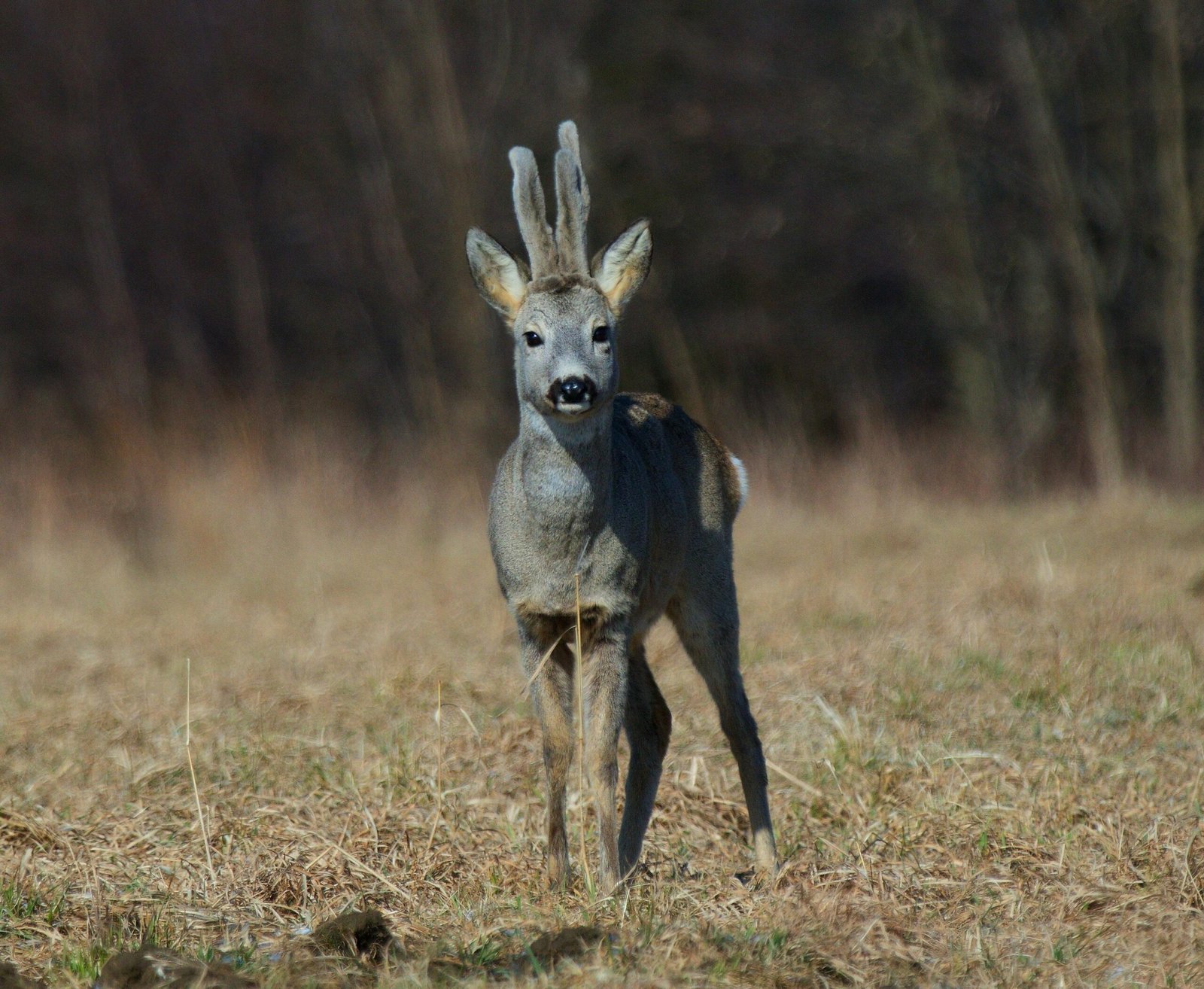
The roe deer is the smallest and most elegant native deer in Europe. It is the only deer species featuring delayed implantation, where fetal development does not begin until months after the rut.
Location
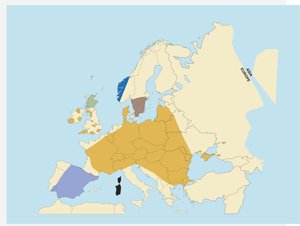
- European distribution: found generally throughout Europe, though it is notably absent from Ireland, central England, the far north, most of Portugal, and the Mediterranean islands.
- Eastern & Asian Range: the range extends east to the Don River (and possibly the Volga) in Russia. It is also found in southwestern Asia, including Anatolia (Turkey), the Caucasus Mountains, northern Iraq, and northern Iran.
- Habitat: highly varied; while they prefer woodlands with low vegetation or openings, they are also found on open moors, grasslands, and alpine meadows.
Description
- Size: males stand 25–36 inches (64–92 cm) at the shoulder and weigh 44–81 pounds (20–37 kg). Females are about 20% smaller.
- Coat: * Summer: rich reddish-brown with a gray face, white chin, and black muzzle band.
- Winter: grayish-brown with two white throat patches and a prominent white rump patch of erectile hairs that expand into a “white disk” when the animal is stressed.
- Antlers: mature bucks typically have three points per side (a main beam, a forward tine, and a rearward tine). The bases, or coronets, are very rough and often touch in older animals. Antlers are shed in November.
- Distinguishing traits: the tail is so small it is essentially invisible. In winter, females grow an anal tuft of hair that is often mistaken for a tail.
Remarks
- Behavior: usually solitary but forms small groups in winter. Unlike other deer, a buck stays with only a single doe during the July–August rut. Both sexes emit a doglike bark when alarmed.
- Diet & activity: primarily nocturnal browsers and grazers that spend the day in cover. They are excellent swimmers and possess well-developed senses.
- Hunting: the roe deer is Europe’s most popular big game animal. Outstanding trophies are best found during the rut (late July/early August) or in early May before crops grow too high.
- Trophy Quality: the highest quality heads are typically taken in Eastern Europe, Britain, and Sweden. Because of their small size, large calibers are unnecessary; rifles in the .243 class are considered ideal.
- Status: they have adapted exceptionally well to human civilization. In Germany alone, approximately 500,000 are harvested annually without depleting the stable population.