
Location
- Broad Range: Found throughout the taiga forest zone from Scandinavia to eastern Siberia, as well as mountain forests across Europe, the Middle East, and Asia.
- European Presence: Primarily occurs in Scandinavia, Russia, and the Carpathian Mountains (Czech-Polish border through Romania).
- Isolated & Reintroduced Populations: Isolated groups exist in northeastern Poland, the Balkans, and possibly southern France. It has been recently reintroduced in Germany, Austria, Switzerland, Italy, and the former Yugoslavia.
- Habitat: Prefers wooded areas and high forests with dense undergrowth, often situated in steep, mountainous terrain.
Description
- Size: The largest of the world’s lynxes. Males stand 24–30 inches at the shoulder and weigh 40–55 pounds, with females being slightly smaller.
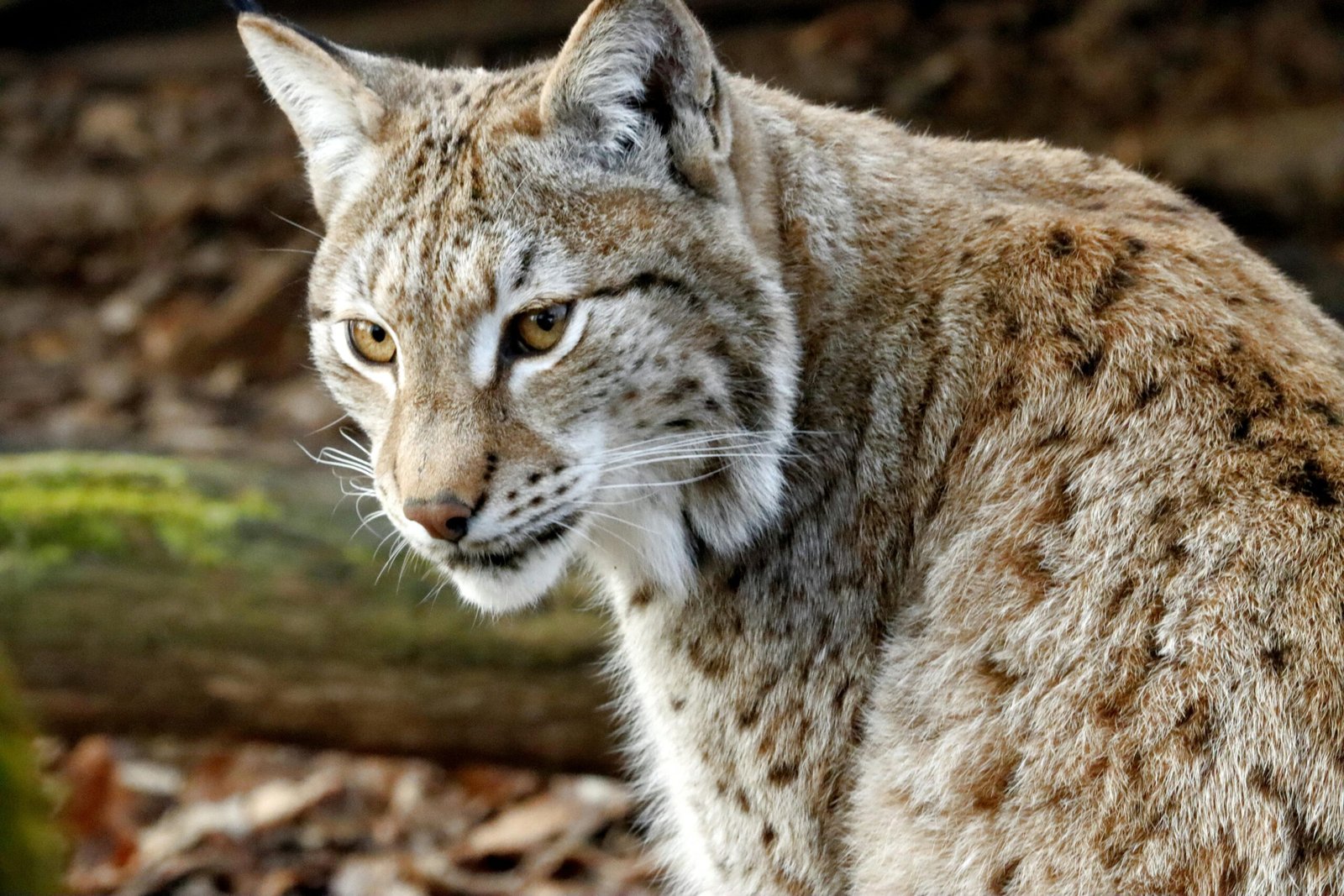
- Physical Features: A medium-sized cat characterized by prominent black ear tufts, pronounced cheek ruffs, long legs, and very large feet. The tail is short with a distinct black tip.
- Coat: The fur ranges from reddish-gray to yellowish-gray and can be spotted, striped, or unpatterned. The winter coat is long and thick, featuring densely furred paws designed for walking in deep snow.
Remarks
- Behavior: A solitary and territorial animal that is shy and rarely seen by humans. It is active mainly during the morning and evening.
- Capabilities: While it is a poor runner and tires quickly, it is a tireless walker, a good tree climber, and a capable swimmer.
- Diet: Primarily hunts by sight, preying on small hoofed mammals like roe deer and chamois. It only targets smaller animals, such as rabbits, when larger prey is scarce.
- Reproduction: Mating occurs in March–April, with 1–5 kittens (usually 2–3) born annually. They can live up to 21 years in captivity.
- Status & History: After nearly disappearing due to hunting in the 19th century, populations have been recovering and expanding since receiving protection in the early 20th century.
- Classification: Currently treated as a separate species within the genus Lynx. While several subspecies (such as the Carpathian, Balkan, and Caucasian lynx) are listed, their scientific validity is often debated.