
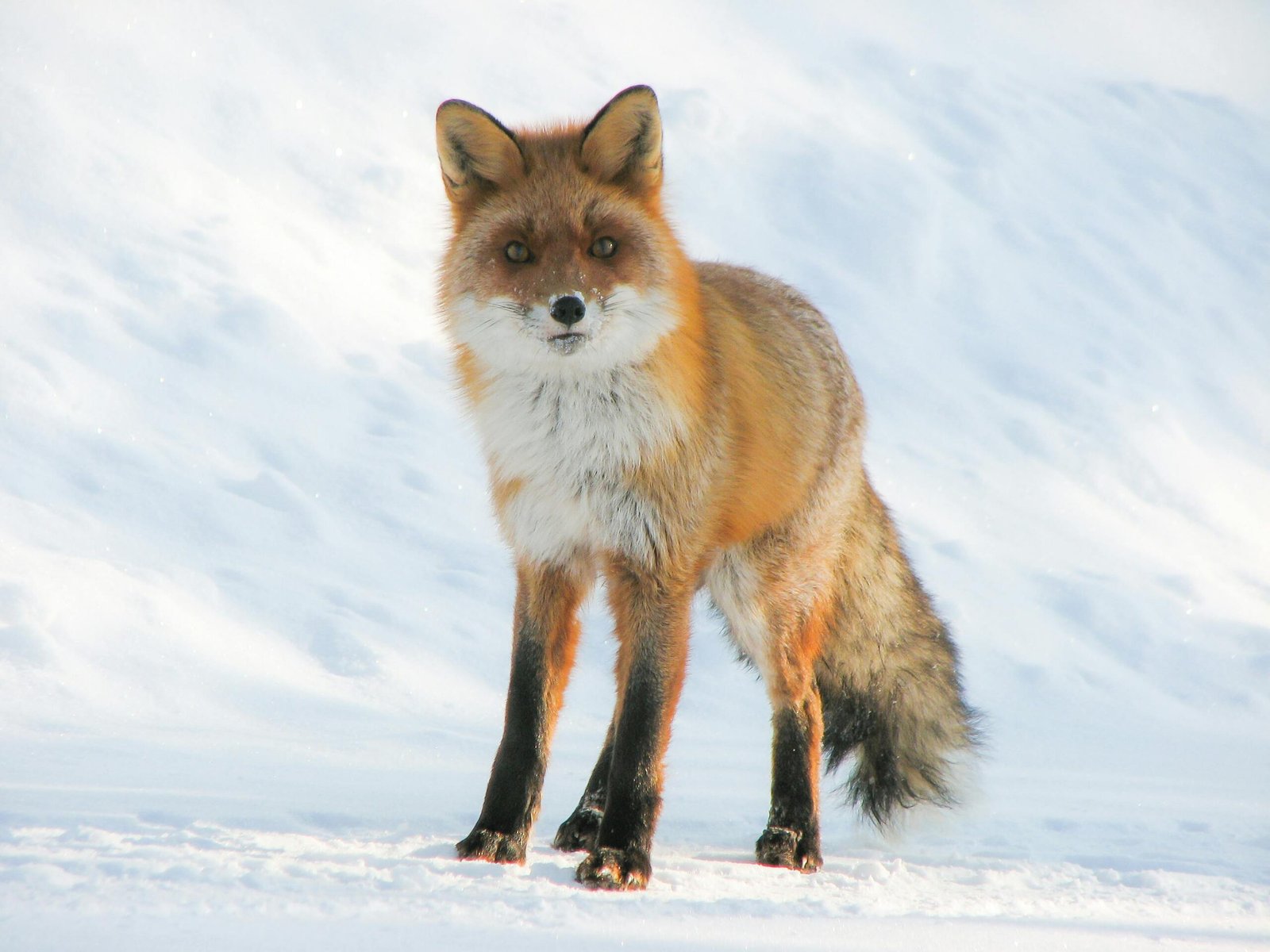
The red fox is the largest species within the genus Vulpes and the most recognizable fox in the world. It is a staple of global folklore, nearly always portrayed as a “sly” or “cunning” character.
Location
- European distribution: found across all of Europe.
- Global range: it is the most widespread and abundant fox species, occupying almost every habitat in the Northern Hemisphere.
- Adaptability: this species is highly resilient and can withstand, or even thrive in, areas with heavy human disturbance and urbanization.
Description
- Size: adult red foxes typically weigh between 3.6–7.6 kg (7.9–17 lb). They have a head and body length of 46–90 cm (18–35 in).
- Sexual dimorphism: differences between the sexes are noticeable; males are typically 15% heavier than females.
- Coat: as the name suggests, the fur is predominantly reddish-brown.
- Tail: features a prominent tail (or “brush”) measuring 30–55 cm (12–22 in) in length.
Remarks
- Classification: it is the largest of the “true foxes.”
- Cultural impact: because of its wide distribution and frequent interactions with people, the red fox is a primary figure in the stories and mythologies of many different cultures.
- Ecological success: its status as the most widespread fox is due to its flexible diet and ability to inhabit diverse environments ranging from deep forests to city centers.