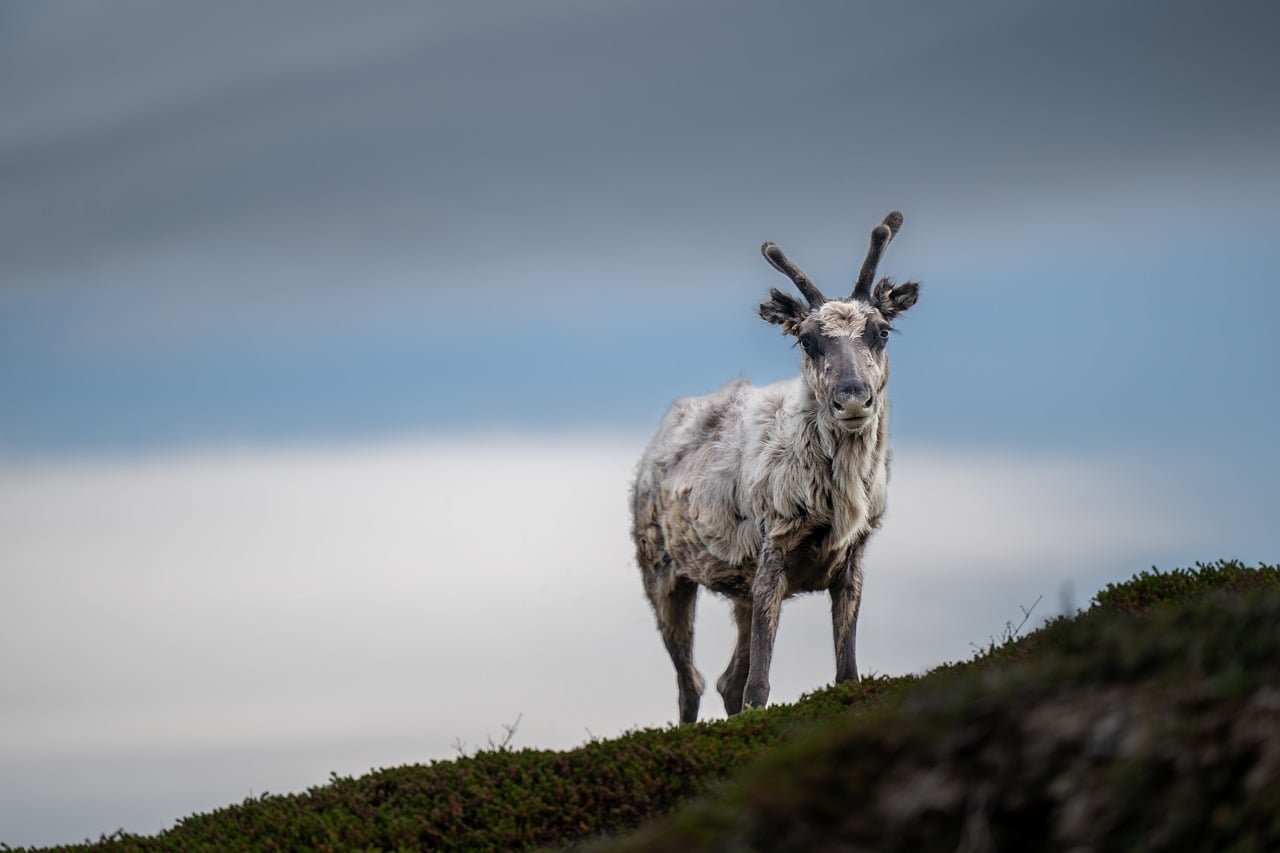
Reindeer are unique among deer in that both sexes grow antlers, which are the largest in proportion to body size of any antlered animal. While they are the same species as the North American caribou, European wild specimens tend to be slightly smaller.
Location
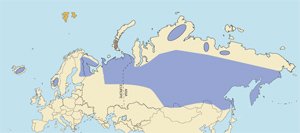
- Wild populations: found in Svalbard, the Dovrefjell mountains, Hardangervidda plateau, and Njardaheim Reserve in southern Norway. They also range from eastern Finland across northern Russia, and have been introduced to Iceland.
- Domesticated & feral ranges: widely distributed in Norway, Sweden, Finland, and Siberia. They have also been introduced to Scotland, Greenland, Argentina, Chile, and several oceanic islands.
- Habitat: primarily inhabit tundra, mountain heath, and taiga forests.
Description
- Size: males stand 39–47 inches (99–119 cm) at the shoulder and weigh 150–330 pounds (68–150 kg). Females are about one-third smaller.
- Physical features: characteristics include a broad muzzle, a throat mane, and wide, deeply cleft hooves designed for soft ground and snow. They produce a distinct clicking sound when walking due to a tendon slipping over a foot bone.
- Antlers: fully developed by September. Males typically feature a vertically palmated brow tine (the “shovel”). Antlers are shed by males in winter, but females retain theirs until early summer.
- Coat: consists of a heavy undercoat and tubular, air-filled guard hairs for insulation and buoyancy. Color transitions from dark grayish-brown in summer to pale gray in winter.
Remarks
- Behavior: highly gregarious, with females and young forming large herds. They are excellent swimmers and possess great endurance, though their eyesight is relatively poor. Their primary natural predator is the wolf.
- Diet: diurnal feeders that consume various vegetation, focusing heavily on lichens during winter months.
- Hunting: in Norway, reindeer are a major game species and are hunted on foot, often with single-shot rifles. In Iceland, they provide a unique sporting experience, though their antlers generally do not reach the size of those on the mainland.
- Taxonomy: while scientists recognize several European subspecies—including the European reindeer, the small Spitzbergen reindeer, and the Novaya Zemlya reindeer—they are generally grouped together for record-keeping purposes.
- Management: most reindeer in Sweden and Finland are domesticated; however, Finland maintains a small, strictly protected wild herd.