
Location
- Native Habitat: historically, this sheep was the traditional livestock of the lower Hungarian flatlands.
- Current Distribution: they are found across the flatlands of the Hungarian Puszta and extend into the hill ranges of Albania and former Yugoslavian states, such as Croatia, Macedonia, and Serbia.
- Status: large herds are completely protected within the Hortobagy National Park in Hungary, though wild herds exist throughout their range.
Description
- Size: males stand approximately 27 inches (70 cm) at the shoulder and weigh between 120–165 pounds (55–75 kg). Females are roughly 15% smaller.
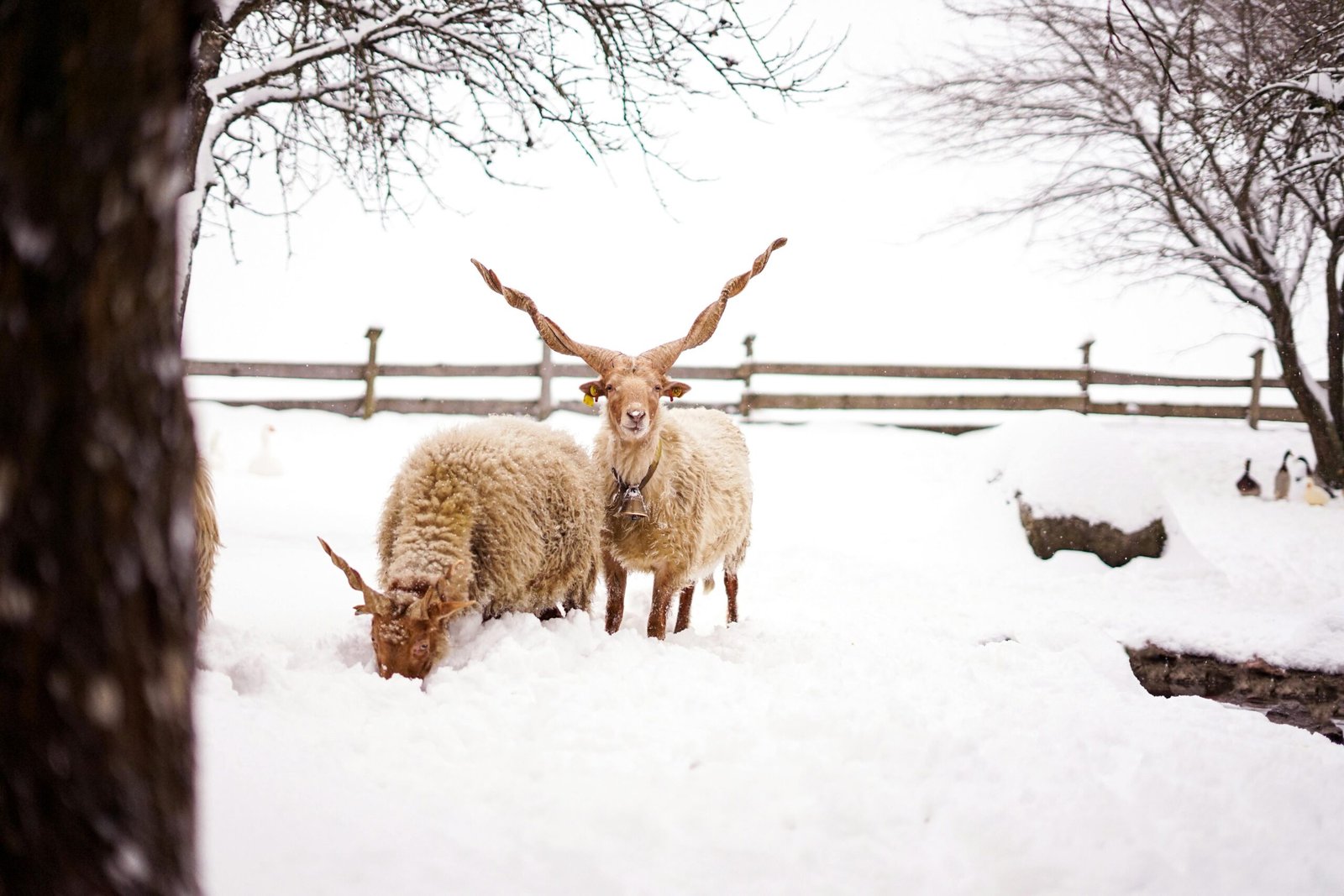
- Coat: the wool is hairy rather than soft. While various colorations exist, the population is predominantly white or black (about 20%).
- Horns: both sexes possess horns that grow in a unique, extremely tight corkscrew spiral, rising upward and obliquely from the skull.
- Adult male horns reach approximately 30 inches (75–80 cm) in length.
- Male horns are about 60% larger than those of the females.
Remarks
- Historical origin: originating in Central Asia, these sheep were introduced to Europe via Turkey and have accompanied Magyarian tribes in semi-domesticated form since the 9th Century.
- Conservation history: the breed was near extinction in 1903, but a century-long program to maintain them in semi-nomadic and wild states has led to a dramatic recovery in numbers.
- Behavior: they are gregarious animals that stay in large flocks year-round, though very mature males may form separate bachelor groups.
- Reproduction: mating occurs in the summer, with ewes typically giving birth to two lambs in January or February.
- Feeding and senses: exclusively grazers, they travel large distances during the day to feed. They possess very good vision, though their hearing and sense of smell are less developed.
- Hunting traits: when hunted, they become extremely alert and wary, making for a difficult stalk.