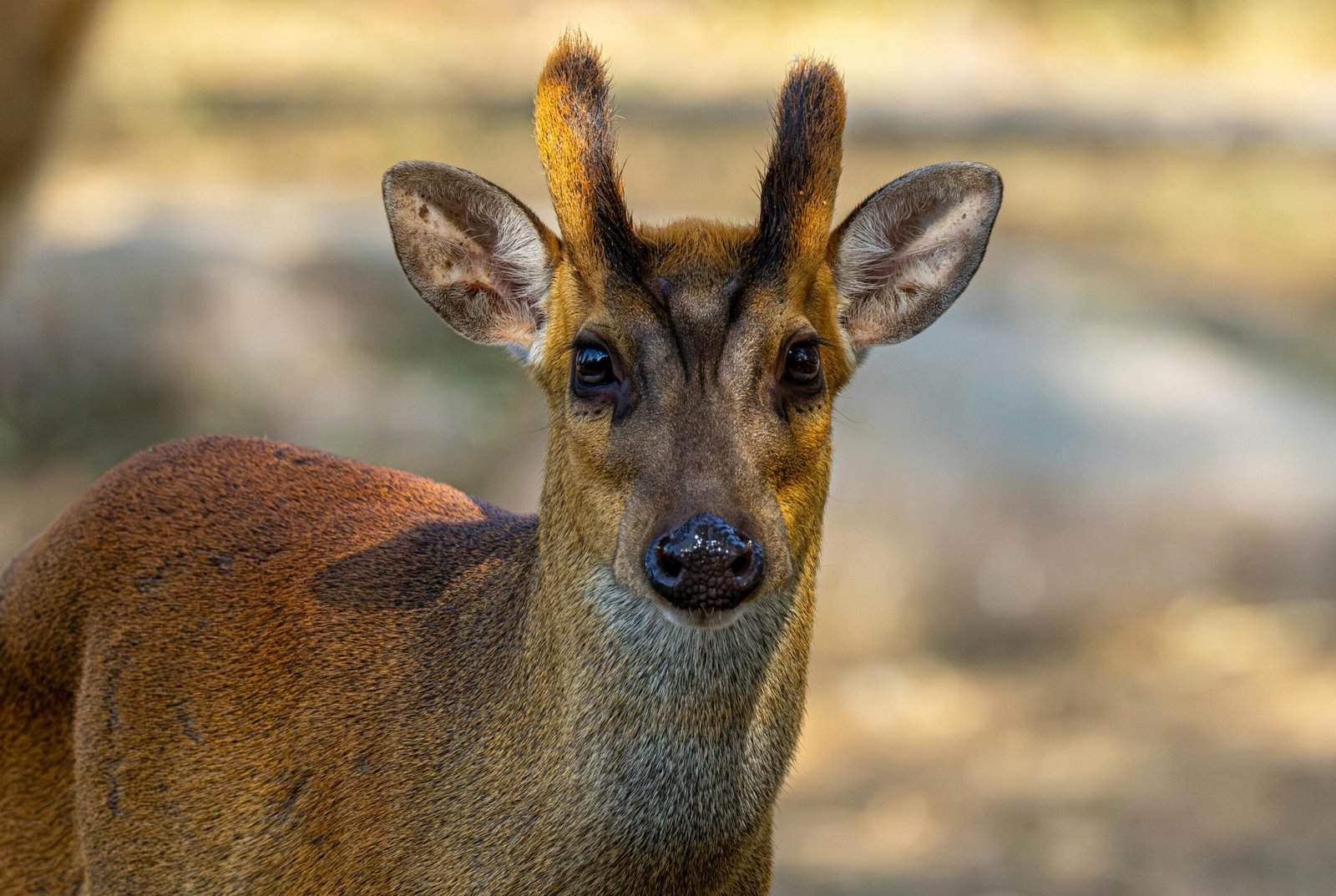
Also known as the Chinese muntjac, barking deer, or rib-faced deer, this species was named after the British naturalist John Reeves, who collected the first specimen around 1838.
Location
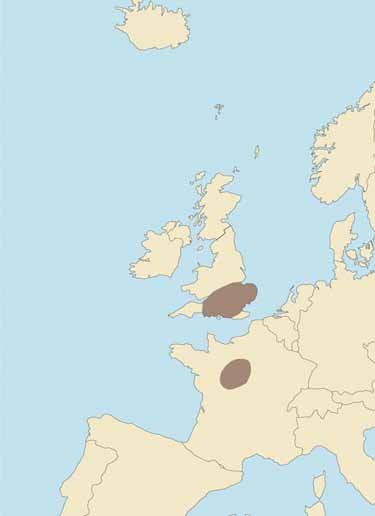
- Primary european range: firmly established in the wild across many parts of southern England, where they continue to expand their territory.
- Other areas: introduced to France around 1890, where they primarily survive on various parks and estates.
- Origin: native to eastern China and Taiwan.
- Habitat: they prefer woodland with thick undergrowth and are usually found near water sources.
Description
- Size: a very small deer. Males stand 18–20 inches (46–51 cm) at the shoulder and weigh 26–30 pounds (12–14 kg); females are slightly smaller.
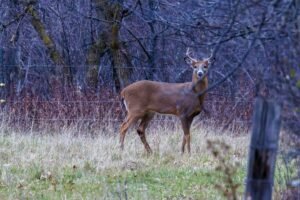
- Coloration: reddish-brown with darker legs and a black stripe on the back of the neck. A distinct black stripe runs up the face and branches toward the antlers, forming a “Y” shape. The throat, chin, and underside of the tail are white.
- Antlers: only males possess antlers, which grow from long, hair-covered bony pedicels. They consist of a short, curved spike with a single short tine at the base.
- Tusks: males have elongated upper canine teeth that protrude from the lips like small tusks. Females possess small bony knobs and hair tufts instead of antlers and lack tusks.
Remarks
- Behavior: primarily solitary or paired and highly territorial. They are unique for having no fixed mating season, with fawns born year-round.
- The “Bark”: males are known for a remarkably loud, repetitive bark used when alarmed or during the rut, which can last for over an hour.
- History in England: originally brought to the Woburn Abbey estate to replace the larger Indian muntjac. While some suspected hybridization between the two species, scientific tests have confirmed that the English wild population consists entirely of pure Reeves’ muntjac.
- Hunting: considered a high-quality game animal usually hunted by stalking. England is currently recognized as the only location where non-residents can hunt this species in the wild.